
Automotive manufacturing
Reducing heat-treatment distortion
A validated stacking change helped reduce total cost of poor quality by more than 70%.
The challenge
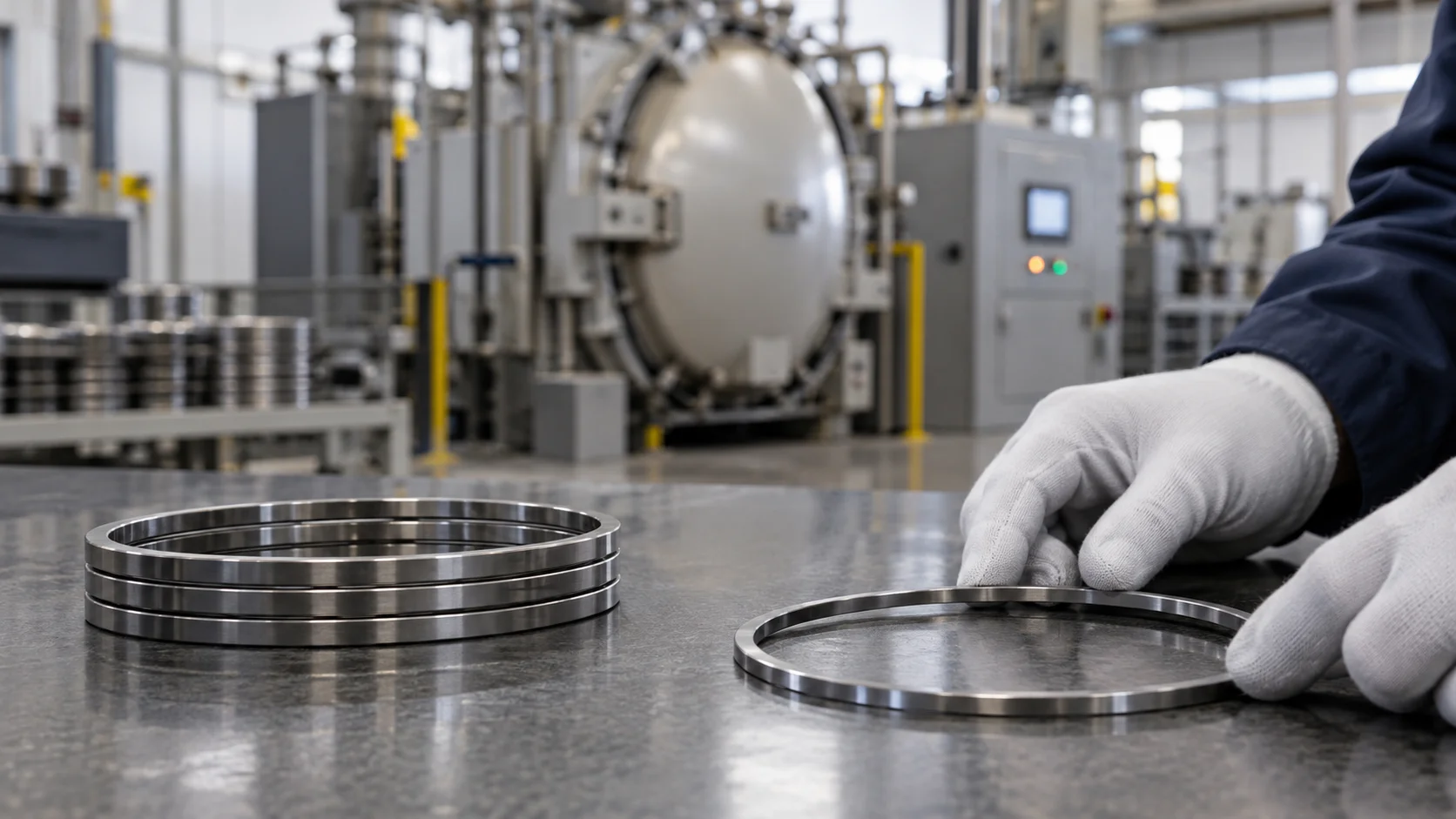
An automotive manufacturer faced recurring distortion in a thin, ring-shaped component following its second heat-treatment cycle. Affected components would wobble when placed on a flat surface and fail to meet load requirements.
The project focused on identifying the cause and validating a practical process improvement.
Investigation and analysis
Ammar worked with the manufacturing team to define the problem, collect process and performance data, and investigate potential causes. Brainstorming and five-why analysis identified the component stacking arrangement as a variable worth testing.
The existing process used stacks of three components. The team evaluated alternative configurations and used hypothesis testing to compare performance.
A controlled process change
Increasing the stack from three components to four eliminated the observed distortion during validation. A five-component stack was also evaluated, but it did not achieve the required heat-treatment outcome under existing equipment settings. Further parameter adjustments would have increased energy requirements.
The team selected the four-component configuration and validated it over two weeks across all three production shifts before introducing it into regular production.
The results
The manufacturer continued monitoring performance after implementation. Year-end results showed a reduction of more than 70% in total cost of poor quality for the implementation year, alongside improved productivity.
The project demonstrated how structured investigation and controlled trials can identify an effective process change without requiring more energy-intensive operating conditions.